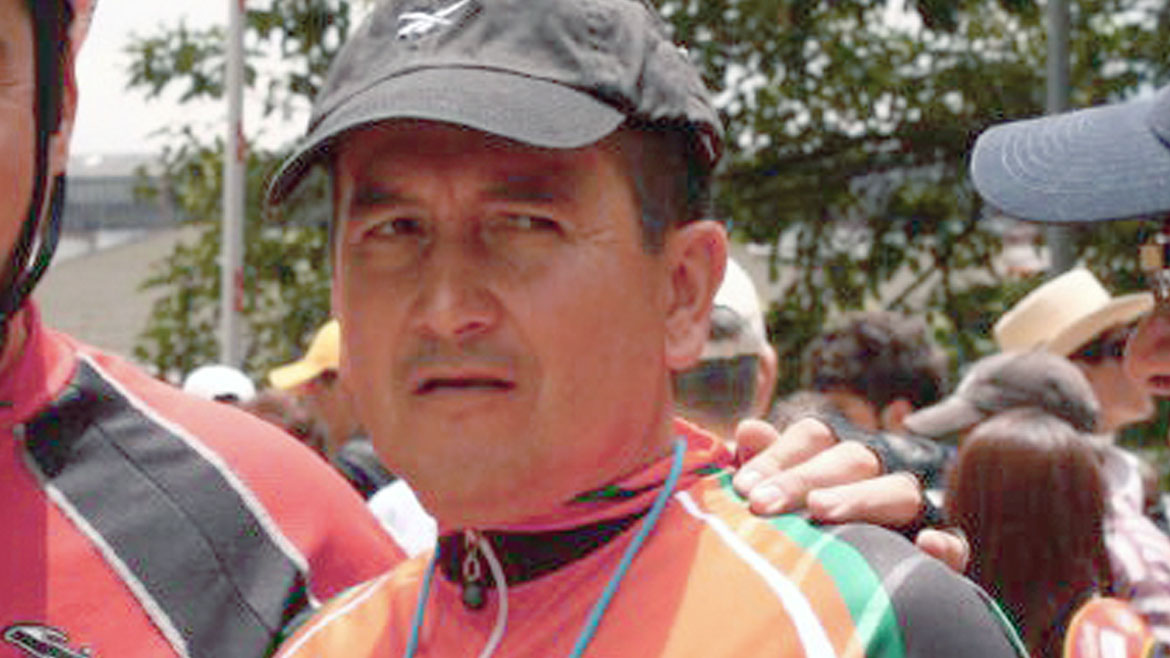
The world of professional cycling, often celebrated for its grueling endurance, breathtaking landscapes, and inspiring tales of human achievement, has recently found itself grappling with a disturbing series of accusations involving some of its most revered figures. While the sport has its share of doping scandals and controversial moments, nothing quite prepares fans for allegations of violence and murder. One such unfolding saga centres on Lucho Herrera, a Colombian cycling legend, whose illustrious career is now overshadowed by grave accusations of orchestrating a quadruple murder.
The Ascent of 'El Jardinerito': Lucho Herrera's Enduring Legacy
Luis Alberto "Lucho" Herrera, affectionately known as "El Jardinerito" (The Little Gardener) due to his humble beginnings and slight stature, carved an indelible mark on professional cycling during the 1980s. Hailing from Fusagasugá, Colombia, Herrera became a symbol of national pride, shattering perceptions and opening doors for future generations of Colombian climbers. His career was characterized by audacious attacks in the mountains, a flair that captivated audiences worldwide and earned him a reputation as one of the sport's most exciting riders.
His crowning achievement came in 1987 when he clinched overall victory in the Vuelta a España, becoming the first Colombian, and indeed the first South American, to win a Grand Tour. This monumental win was not just a personal triumph but a moment of immense national celebration, solidifying his status as a national hero. Beyond the Vuelta, Herrera also left his mark on the sport's most prestigious race, the Tour de France, where he twice secured the coveted polka dot jersey as the King of the Mountains. He also boasts multiple stage victories across all three Grand Tours – the Tour de France, Giro d'Italia, and Vuelta a España – showcasing his consistent prowess in the high mountains.
Lucho Herrera’s career was a testament to grit, talent, and the sheer will to overcome adversity, often competing against well-funded European teams with far greater resources. His legacy is deeply intertwined with the rise of Colombian cycling, inspiring countless young riders to pursue their dreams on the challenging roads of the world. Yet, this inspiring narrative has now taken a profoundly dark and unsettling turn.
From Victim to Accused: The Unfolding Allegations of Murder
The allegations against Lucho Herrera are not only shocking in their nature but also complex, rooted in the turbulent socio-political landscape of Colombia during his time. According to reports from Colombian media, the former cycling star is currently facing an official investigation for allegedly orchestrating the murder of four neighbours. The motive, as claimed by ex-paramilitaries who have testified before justice officials, was to seize their land.
The testimony paints a chilling picture: Herrera allegedly provided two envelopes to the paramilitaries. One purportedly contained photographs of the victims, whom he presented as FARC guerrillas threatening to kidnap him. The other envelope, it is claimed, held 40 million pesos (approximately €8,000), intended to finance the operation. The bodies of the victims were reportedly buried near Herrera's property in Fusagasugá, the same region where he grew up and built his fame. This accusation of a cycling champion involved in such a grave crime, a 'champion cyclisme meurtre', has sent shockwaves across Colombia and the international cycling community.
Crucially, the context surrounding these allegations reveals a complex web of fear and self-preservation. Some years prior to these alleged events, Lucho Herrera himself was kidnapped by the FARC (Revolutionary Armed Forces of Colombia), a Marxist-Leninist guerrilla group. This traumatic experience, common for wealthy individuals in conflict-ridden Colombia, reportedly led him to seek protection and proximity with a paramilitary group led by Martin Llanos. It is this proximity, prosecutors suggest, that Herrera may have leveraged to orchestrate the murders under the false pretense of personal security against renewed FARC threats, using the ongoing conflict as a cover for a land dispute.
The Shadow of Paramilitarism and Land Disputes
Understanding the historical context of Colombia in the late 20th and early 21st centuries is essential to grasp the severity and complexity of these accusations. The country was plagued by a protracted internal conflict involving the FARC, other guerrilla groups, government forces, and various right-wing paramilitary organizations. Civilians, especially in rural areas, were frequently caught in the crossfire, subjected to extortion, kidnapping, and violence from all sides. Land ownership was, and continues to be, a highly contentious issue, often leading to violent disputes.
In this volatile environment, individuals with means or influence, like Herrera, sometimes sought alliances with armed groups for protection or to settle scores. The allegations suggest that Herrera, traumatized by his own kidnapping, might have tragically abused this dangerous alliance for personal gain, leading to the brutal deaths of his neighbours. His defence, issued in a statement, has yet to be fully detailed, but the testimonies from former paramilitaries present a formidable challenge.
A Dark Chapter for Cycling: Herrera and the Broader Picture
The accusations against Lucho Herrera cast a long shadow over his once-unblemished heroic image, forcing fans and the nation to reconcile the figure of the celebrated athlete with that of an alleged criminal mastermind. This is not an isolated incident concerning high-profile cyclists facing grave criminal charges. The cycling world has recently witnessed another shocking development with Rohan Dennis: Ex-Cycling World Champion Faces Wife Murder Charge. Dennis, an Australian two-time world time trial champion, stands accused of murdering his wife, Melissa Hoskins, in late 2023. These cases, while distinct in their circumstances, contribute to what can only be described as Cycling's Dark Chapter: Champions Dennis & Herrera Face Murder Charges, revealing a disturbing trend where former sporting heroes become entangled in severe legal battles.
For Herrera, who also revealed in 2017 that he was battling skin cancer—a common ailment among cyclists exposed to years of sun—the weight of these new allegations adds a tragic layer to his twilight years. The legal proceedings in Colombia are now officially open, and the former paramilitaries' testimonies are crucial in an investigation that promises to be lengthy and complex. The Colombian justice system will face the daunting task of sifting through decades-old events, relying on witness accounts from a period marked by violence and impunity.
The implications for Herrera’s legacy are profound. A man once revered for bringing joy and pride to a nation now stands accused of heinous crimes that strike at the very core of trust and humanity. The public’s perception of ‘El Jardinerito’ will undoubtedly be challenged, regardless of the eventual legal outcome. It serves as a stark reminder that the personal lives of public figures, especially in regions scarred by conflict, can harbor hidden complexities far removed from the glory of their professional achievements.
Conclusion
The story of Lucho Herrera embodies a tragic duality: the inspiring rise of a humble climber to global cycling stardom, and the shocking fall from grace into the depths of grave criminal accusations. As Colombia, and indeed the global cycling community, awaits further developments in this unsettling investigation, the allegations against Herrera underscore the harsh realities that can exist beneath the surface of sporting heroism. The trial, when it proceeds, will not only determine the fate of a legendary figure but also challenge the narrative of a nation's sporting pride, forcing a difficult confrontation with the darker chapters of its recent past. The gravity of a 'champion cyclisme meurtre' accusation against such a revered icon serves as a poignant and somber lesson on the complexities of legacy, justice, and the human condition.